
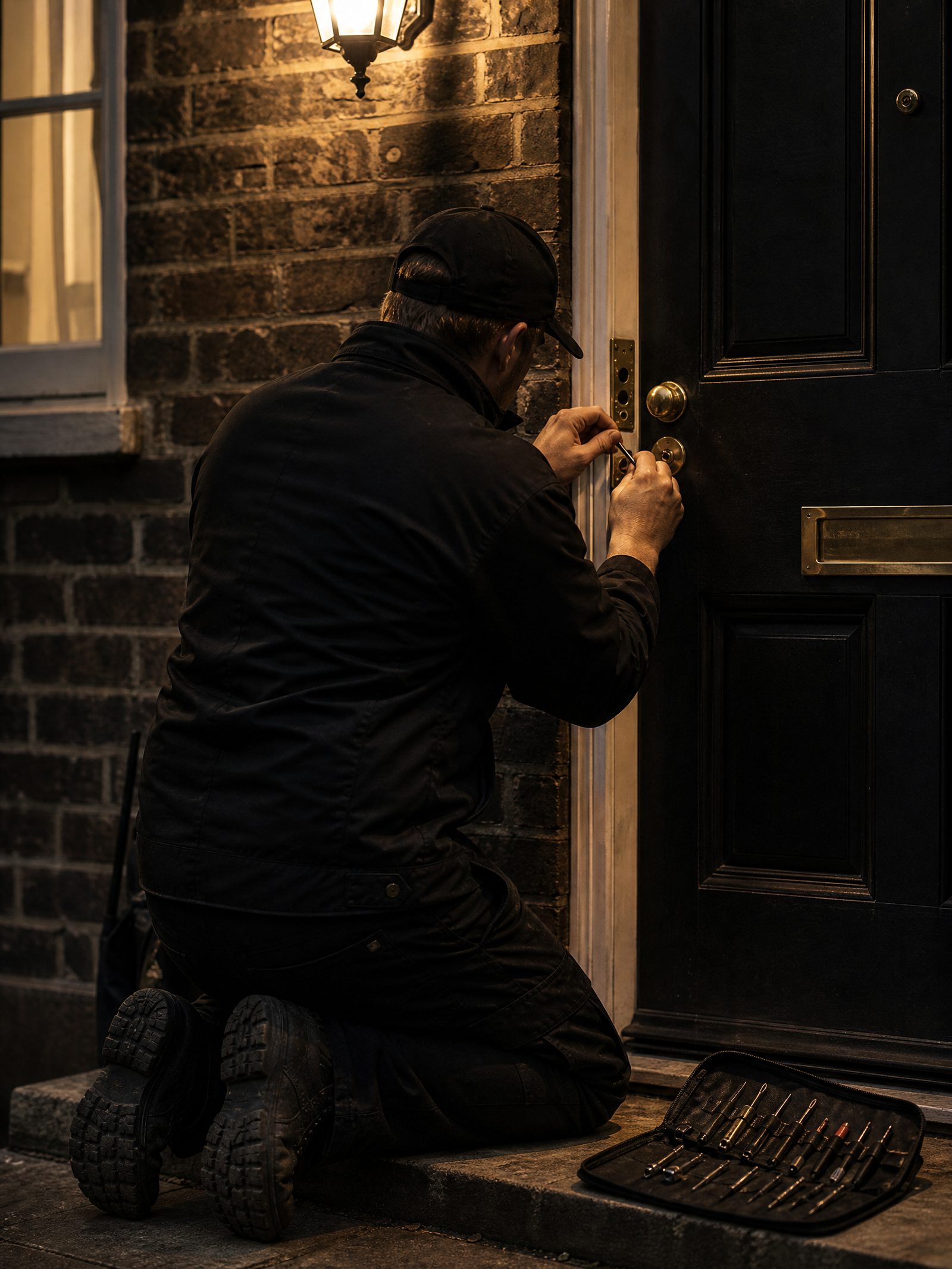
Every home insurance policy has a security condition buried in the small print. Most homeowners never read it, and a significant number only discover what it said when a claim is questioned.
Where to find your requirement
It is normally in one of two places: the policy schedule, which is the summary document that comes with your certificate, or the security section of the policy terms and conditions. Look for words like 'approved locks', 'minimum standard', 'five lever mortice' or a British Standard reference.
If it is not obvious, ring your insurer and ask directly what lock standard they require on external doors. Get the answer in writing if you can.
The two standards that matter
BS3621, for timber doors
BS3621 is the British Standard for thief-resistant locks. A BS3621 deadlock is tested against drilling, picking, force and a set of standard attack methods. It is what most policies require on the main external door of a property.
You may also see BS3621 referred to as a 'five lever' lock, which refers to the internal mechanism. Both descriptions mean the same standard.
TS007 3-star, for UPVC and composite doors
TS007 is the standard covering cylinder security. A 3-star cylinder achieves the full rating on its own, which means it does not depend on the handle or furniture fitted to the door.
This is the relevant standard for the vast majority of modern front doors in the UK, because those doors use a euro cylinder rather than a mortice lock.
Why a claim can be refused
The common trap
A policy may require a 3-star cylinder, but the door may have a standard one fitted - often because the door was installed years before the policy was written. The claim is then assessed against what was actually fitted at the time of the loss, not what the policy assumed.
This is not an insurer being unreasonable. It is a condition of cover, and if the condition was not met, the cover does not apply in the way the homeowner assumed.
Getting it right
- Find the exact standard your policy requires, in writing
- Have the existing locks identified so you know what you have
- Upgrade anything below specification - typically £90 to £160 per door
- Keep the written specification of what was fitted with your policy documents
That last point matters more than people expect. When a claim arises, insurers ask for evidence of the specification installed. A locksmith who provides written details of the lock type, standard and date fitted is giving you the document you will need.
Beyond the front door
Some policies also specify window locks on all ground floor openings, or particular requirements for patio and French doors. Check the full security section rather than just the door requirement, because a claim can be affected by any of them.
5 minute read · updated October 2026
This guidance is written by KMG Locksmiths, an emergency locksmith based in Skelmersdale, West Lancashire, covering a 30-mile radius 24 hours a day.